


Thoughtstorm® Manual - Digital
Non-returnable
$9.99
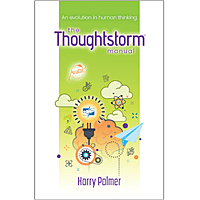
The Thoughtstorm® Manual: An Evolution In Human Thinking by Harry Palmer presents the Thoughtstorm process as a tool for creative thinking and problem-solving. The initial project began in 1986 with a discussion on whether thinking could be improved and if there are more effective, cooperative ways of thinking.
The Thoughtstorm Process has this goal: To unlock the potential of thinking. The process aims to move beyond individual mental aggregates (decisions, beliefs, attitudes, etc.) that fix thinking into a narrow range of possibilities and obscure the causal nature of things. The process penetrates to the collective consciousness level of a subject, leading to a deeper, more compassionate comprehension of reality.
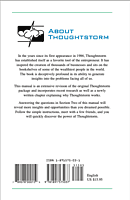
In the years since its first appearance, Thoughtstorm has established itself as a favorite tool of the entrepreneur. It has inspired the creation of thousands of businesses. Deceptively simple, yet profound, its ability to generate insights into problems is a priceless technology.
Product Details
Read an Excerpt from the Preface
The initial seed of speculation that launched the Thoughtstorm project in 1986 dropped out of a discussion on how organisms evolve different adaptations in their competition to survive. Some creatures depend upon natural colorations for camouflage, others survive by fleetness of foot or fin, others by the force of tooth and claw.
Probably you can think of many other adaptations that species have evolved in their competition to dominate and survive, but the most powerful of all adaptations is the ability to think. In a few millennia, thinking has achieved virtual domination for any species that has evolved and employed it.
Could thinking be improved? Does it have potential still to be unlocked? How vital is it
for us to unlock this potential? In the endless churning of evolution, time and events not only test the immediate survival value of each species’ adaptations, but they test the long-range consequences as well.
Turning the adaptation that permitted the human species to survive and dominate other species into a mechanism for competition among members of our own species may be the wrong turn that leads to self-extinction.
Thinking could yet join the anonymous club of adaptations that fail the long-term test. Our ironic epitaph: Humankind, destroyed by its ability to survive.
Thus the initial seed of speculation was this: Are there more effective (rational, cooperative, compassionate) ways of thinking? Methods whose long-term consequences will not lead to oblivion? That is how the first discussion session, the genesis of Thoughtstorm, began.
Seven people were invited to meet in a library conference room to participate in a research project. As the host, I read them the following statement:
“It is demonstrably true that the output power of a single source can be aligned with the output power of another source and end up with more total power than either source is capable of producing alone. For example: multi-engine aircraft, banks of power generators, teams of horses, packs of dogs, the strands of a rope, etc.
“The question is, can this same alignment principle be applied to human thinking?”
Table of Contents:
Section One: The Beginnings
A Short History
Why It Works
Commentary on the Precepts
Advice for Pilots
Hosting Your First Session
The Procedure
Phenomena Encountered
Questions and Answers
Section Two: The Topics
Alignment Questions
Living Together
Creating It
Getting Rich
Selling It
Getting Elected
Running It Better
Looking Forward
Just Wondering
New Directions
Creating Your Own Questions
Appendix
Thoughtstorm Instructions
Thoughtstorm Log
Thoughtstorm Invitation